Three colleagues lean over a touchscreen table that shows a glowing blue process diagram of connected steps.

How We Work

From Business Challenge to Practical Technology Solution

Successful technology projects begin with understanding—not immediately with software, hardware or implementation. We learn about the organization, design the right solution, implement it effectively and keep improving it.

Understand → Assess → Design → Build → Implement → Operate → Improve

  1. 01 — UNDERSTAND

    Start With the Business

    We begin by understanding the organization, its objectives, users, processes and challenges. We look beyond the technology to understand what the organization is trying to achieve.

    A consultant takes notes in a notebook as a business owner explains how her team works, staff at desks behind.

    We examine

    • Business objectives
    • Organizational structure
    • User requirements
    • Existing processes
    • Current technology environment
    • Operational challenges
    • Customer and stakeholder needs
    • Business priorities
    • Budget and resource considerations

    Outcome: A clear understanding of the problem and the desired business outcome.
  2. 02 — ASSESS

    Analyze the Current Environment

    Before recommending a solution, we assess the current environment to identify gaps, risks, inefficiencies and opportunities.

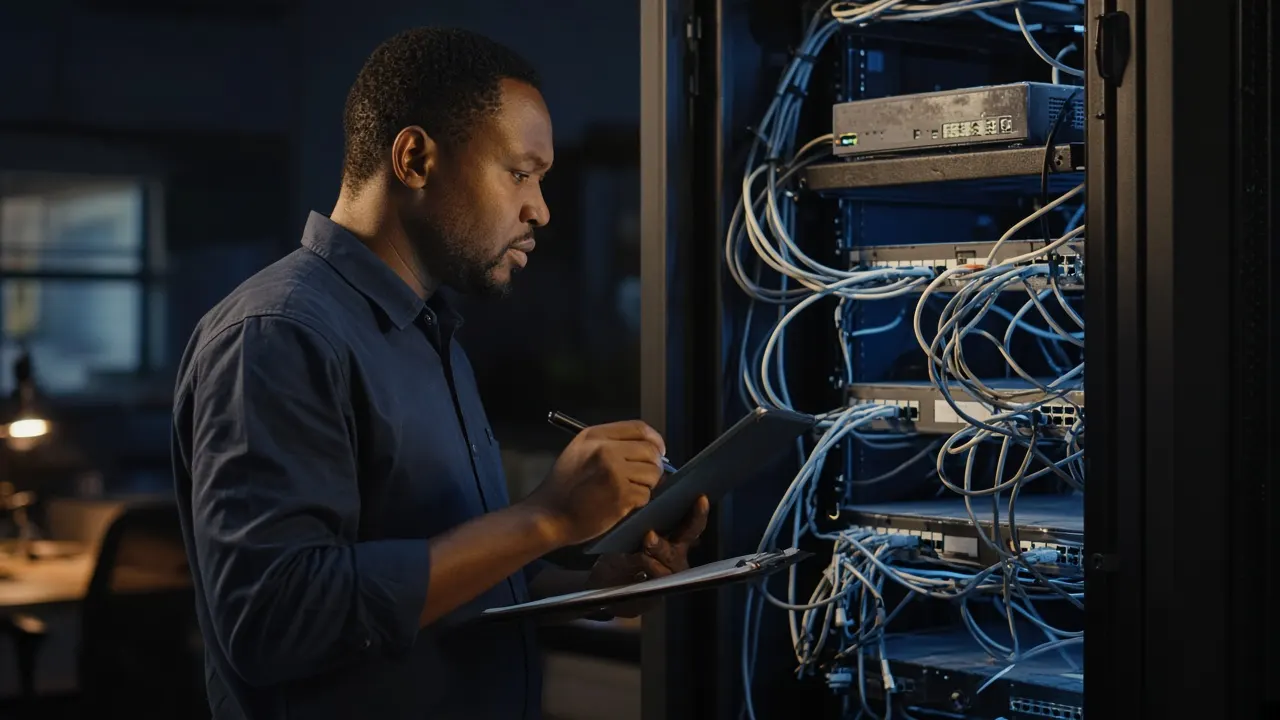
    An assessor with a tablet and clipboard inspects an older network cabinet full of tangled cables and a dusty router.

    Depending on the engagement

    • IT infrastructure, business processes and applications
    • Networks, security and technology maturity
    • Workflows, data, systems and integrations
    • Skills and organizational capabilities
    • What should be retained, improved, replaced, integrated or introduced

    Outcome: A clear picture of the current state and the areas requiring improvement.

  3. 03 — DESIGN

    Design the Right Solution

    We translate business requirements into a practical technology solution aligned with the organization’s environment and priorities.

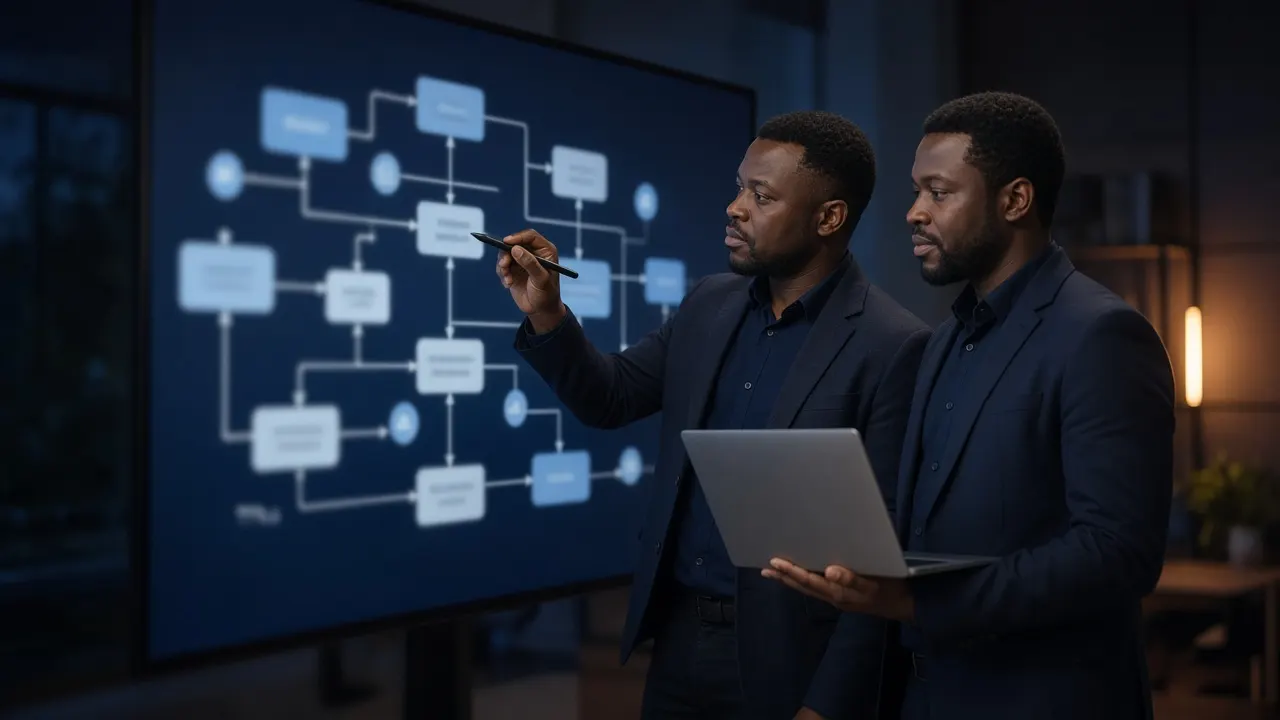
    Two architects at a large wall screen draw a new connection on a system architecture diagram, one holding a laptop.

    Depending on the engagement

    • Business requirements and user experience
    • System architecture and infrastructure
    • Security, data and integration
    • Scalability, performance and maintainability
    • Budget and future growth
    • Technology roadmaps, solution architecture and process designs
    • UI/UX, system specifications, infrastructure designs and security architecture
    • Implementation and project plans

    Outcome: A defined solution that is aligned with business requirements.

  4. 04 — BUILD

    Develop and Configure

    Where development is required, our team builds the solution according to the approved requirements and architecture. We focus on maintainable, scalable and practical technology rather than unnecessary complexity.

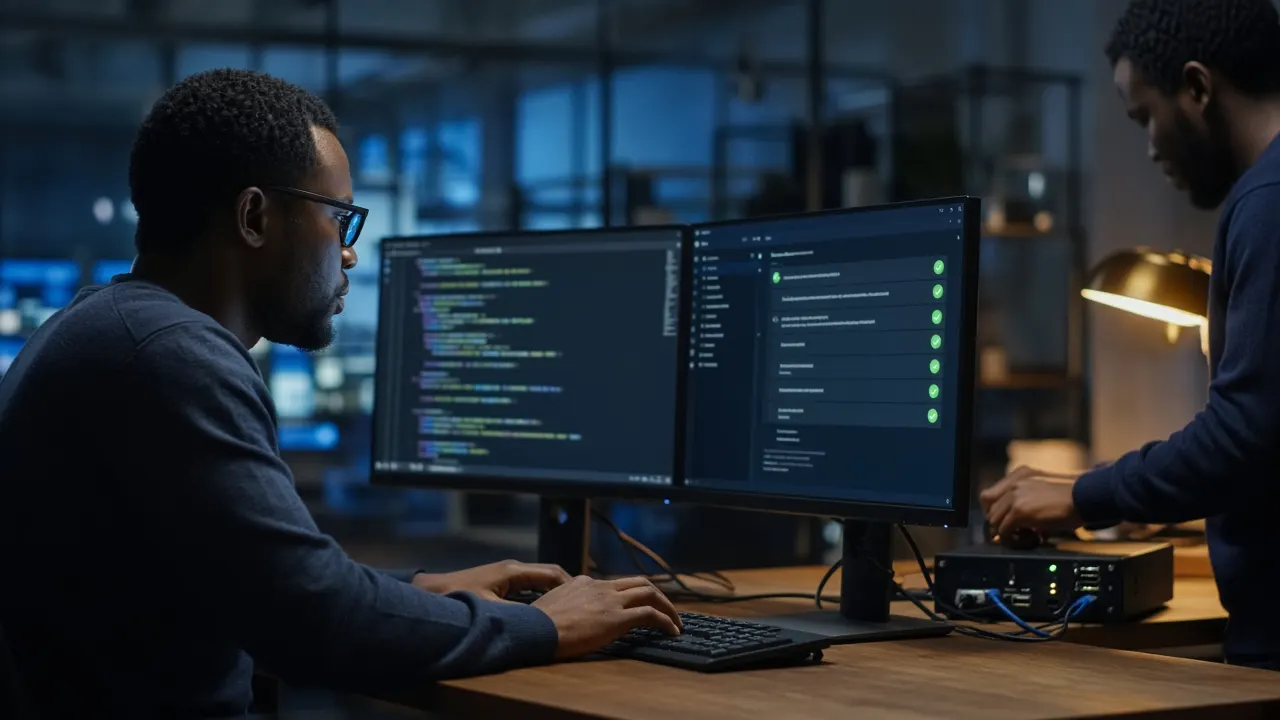
    A developer writes code across two monitors showing a passing test run while a colleague sets up a small server.

    Depending on the engagement

    • Websites, web and mobile applications
    • Business management systems, APIs and databases
    • Dashboards, automation workflows and AI-enabled solutions
    • Cloud environments, network infrastructure and security solutions
    • System and service integrations

    Outcome: A working technology solution ready for implementation.

  5. 05 — IMPLEMENT

    Put Technology Into Operation

    Technology creates value when it works effectively within the organization. We work with stakeholders to introduce the solution into day-to-day operations.

    A specialist helps a staff member sign in to a new system at her desk as colleagues unbox laptops behind them.

    Depending on the engagement

    • Deployment and infrastructure installation
    • System configuration, data migration and integrations
    • User accounts, security configuration and testing
    • Documentation, training and user onboarding
    • Change management and go-live support

    Outcome: Technology becomes part of the organization’s working environment.

  6. 06 — OPERATE

    Keep Technology Working

    After implementation, we can continue supporting and managing the technology environment according to the agreed engagement.

    A support engineer in a headset watches green health checks and a backup progress bar on a laptop late in the evening.

    Depending on the engagement

    • IT and application support
    • Infrastructure, network and cloud management
    • Security, backup and system monitoring
    • Preventive maintenance and IT service management
    • User support and performance reporting

    Outcome: A stable, supported and operational technology environment.

  7. 07 — IMPROVE

    Technology Should Continue to Evolve

    Technology and business requirements change. We use monitoring, feedback, reporting and performance analysis to identify opportunities for improvement.

    A team lead points to an upward trend on a wall screen while two colleagues add idea notes to a glass board.

    Depending on the engagement

    • Performance and process optimization
    • Software enhancements and automation opportunities
    • Security improvements and infrastructure upgrades
    • New integrations and data and analytics improvements
    • Technology modernization, skills development and transformation

    Outcome: Technology continues to support changing business needs.

Our Delivery Principles

How we make technology work for people and organizations.

A trainer and two colleagues discuss a dashboard of charts on a wall-mounted screen in a bright office.

Business First

Technology decisions should support clearly defined organizational objectives.

Practical Solutions

We focus on solutions that organizations can realistically implement, operate and maintain.

User-Centered Design

Technology must work for the people who use it.

Security by Design

Security and responsible technology practices are considered throughout the solution lifecycle.

Scalable Architecture

Solutions should evolve as organizational requirements change.

Measurable Outcomes

Where appropriate, we define measurable objectives and use reporting and analytics to understand performance.

Continuous Improvement

Implementation is not the end of the relationship. We look for ways to improve technology, processes and outcomes.

Our Delivery Model

A clear path from discovery to ongoing improvement.

  1. 01

    Discover

    Understand the organization and its objectives.

  2. 02

    Diagnose

    Identify challenges, gaps, risks and opportunities.

  3. 03

    Design

    Develop the appropriate technology and implementation strategy.

  4. 04

    Deliver

    Build, configure and implement the solution.

  5. 05

    Enable

    Train users, document systems and establish operational processes.

  6. 06

    Support

    Provide ongoing technical and operational support.

  7. 07

    Improve

    Monitor performance and continuously optimize.

What Clients Can Expect

Useful outcomes for the work that matters.

Deliverables depend on the goals and scope of each engagement. Together, we agree what is needed for a useful and maintainable result.

A consultant hands a bound user guide to an office manager in a meeting room, with a system dashboard on the wall screen.
  • Requirements documentation
  • Business process analysis
  • Solution architecture and technology roadmaps
  • UI/UX designs and software systems
  • Infrastructure solutions, integrations and APIs
  • Security controls, data and reporting solutions
  • Testing and quality assurance
  • Deployment, user training and technical documentation
  • Operational procedures, support and maintenance
  • Performance reporting and improvement recommendations

Our Commitment

We don’t begin with “What technology should we sell?”

We begin with:

“What problem are we trying to solve?”

From there, we determine the appropriate technology, implementation approach and level of support required.

Understand the Problem.Design the Right Solution.Deliver With Purpose.Improve Continuously.
Discuss your challenge